

Tattoo Design Inspiration From Japanese Art and Folklore
Tattoo Design Inspiration From Japanese Art and Folklore
Japanese tattooing, or Irezumi, represents one of the most visually striking artistic traditions in the world of body modification. This art form draws deeply from centuries of history, creating a visual language that speaks of strength and the ephemeral nature of life. For those seeking authentic design inspiration, the vast archive of Japanese woodblock prints and ancient legends offers a treasure trove of imagery. These designs translate magnificently onto the skin. The distinct bold lines, vibrant colours, and intricate background elements of traditional Japanese work require a high level of skill to execute correctly. It is a style that demands respect for its origins while allowing for personal storytelling through specific motifs.
In the bustling capital of the UK, the demand for high-quality Japanese-style ink has grown significantly. Enthusiasts often search for the best Japanese tattoos in central London, hoping to find artists who understand the complex rules of composition. Fortunately, just a short journey from the city centre, Red Point Tattoo in North London serves as a hub for this exquisite craft. Our studio houses resident artists like Yutaro (Warriorism), Joe Spaven and Claudia De Sabe. They have dedicated their careers to mastering the flow and nuance of Japanese aesthetics.
Whether you look for a full bodysuit or a standalone sleeve, understanding the folklore behind the imagery is the first step. This article explores the rich tapestry of demons, dragons, and flora that make this style so enduring. We guide you toward a design that holds profound personal meaning. Authentic Irezumi is about more than just ink; it is about wearing a piece of history.

The Enduring Legacy of Ukiyo-e and Irezumi
The visual foundation of modern Japanese tattooing relies heavily on the art of the Edo period. Specifically, it draws from Ukiyo-e woodblock prints. Artists such as Kuniyoshi and Hokusai created dramatic scenes of heroes, monsters, and landscapes. Tattooists subsequently adapted these iconic images for the human body. This historical connection ensures that every traditional design carries a weight of artistic lineage that transcends mere decoration. When you commission a piece in this style, you wear a curated segment of art history.
The narrative quality of these prints is essential. They often depict a specific moment of action or a state of being that the wearer wishes to embody. For instance, a print might show a warrior mid-battle or a quiet moment of reflection under falling blossoms. Translating this 2D art onto a 3D canvas requires an expert eye for placement and flow. At Red Point Tattoo, we pride ourselves on maintaining this historical integrity. We ensure the work sits perfectly on your frame. Our location makes us a prime destination for those seeking Japanese tattoos in central London and the surrounding areas. We offer a space where tradition meets contemporary precision. We encourage clients to study these historical prints to find resonance with the themes of bravery and loyalty.
Mythological Creatures and Their Meanings
Dragons (Ryu) and Tigers (Tora)
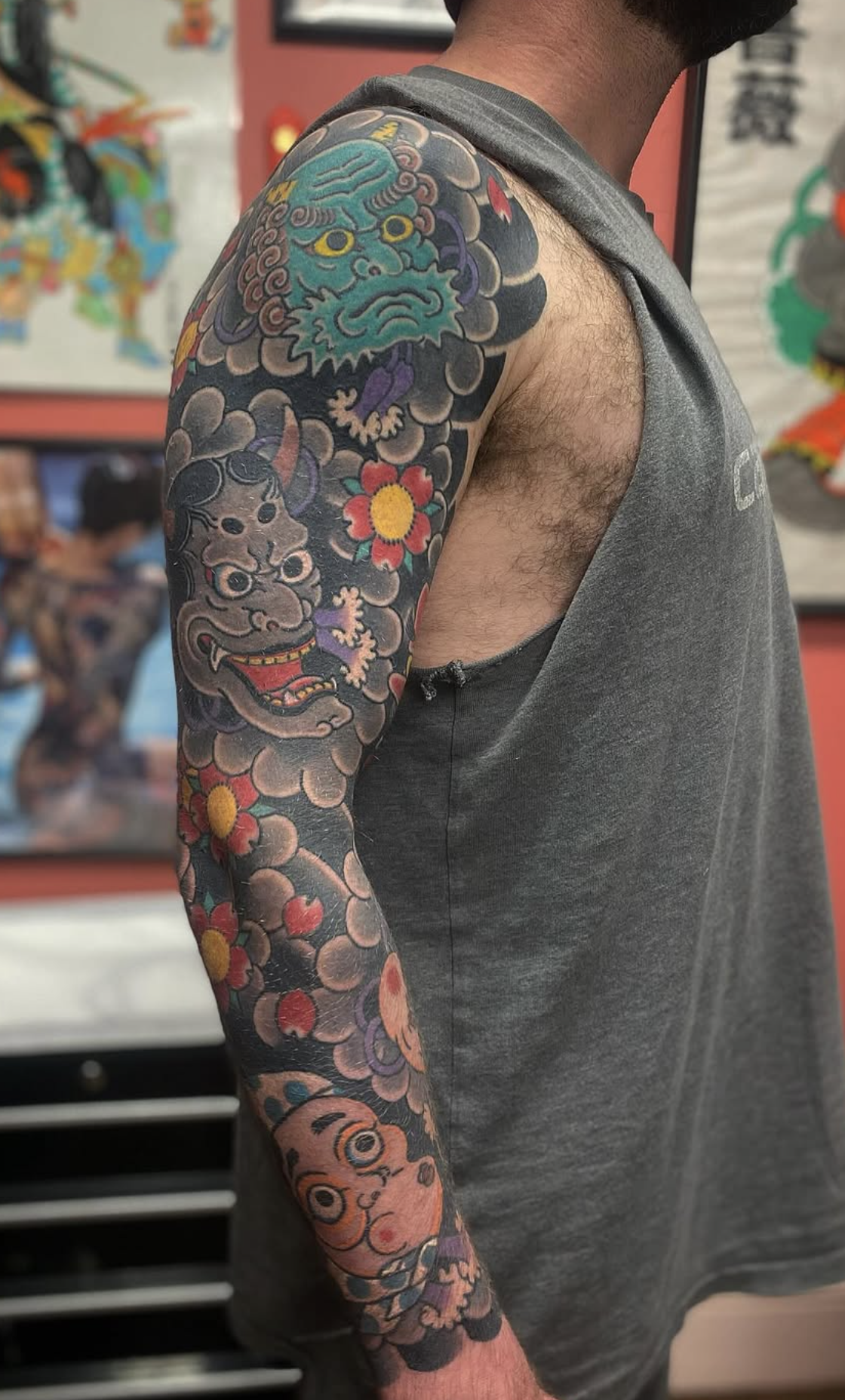
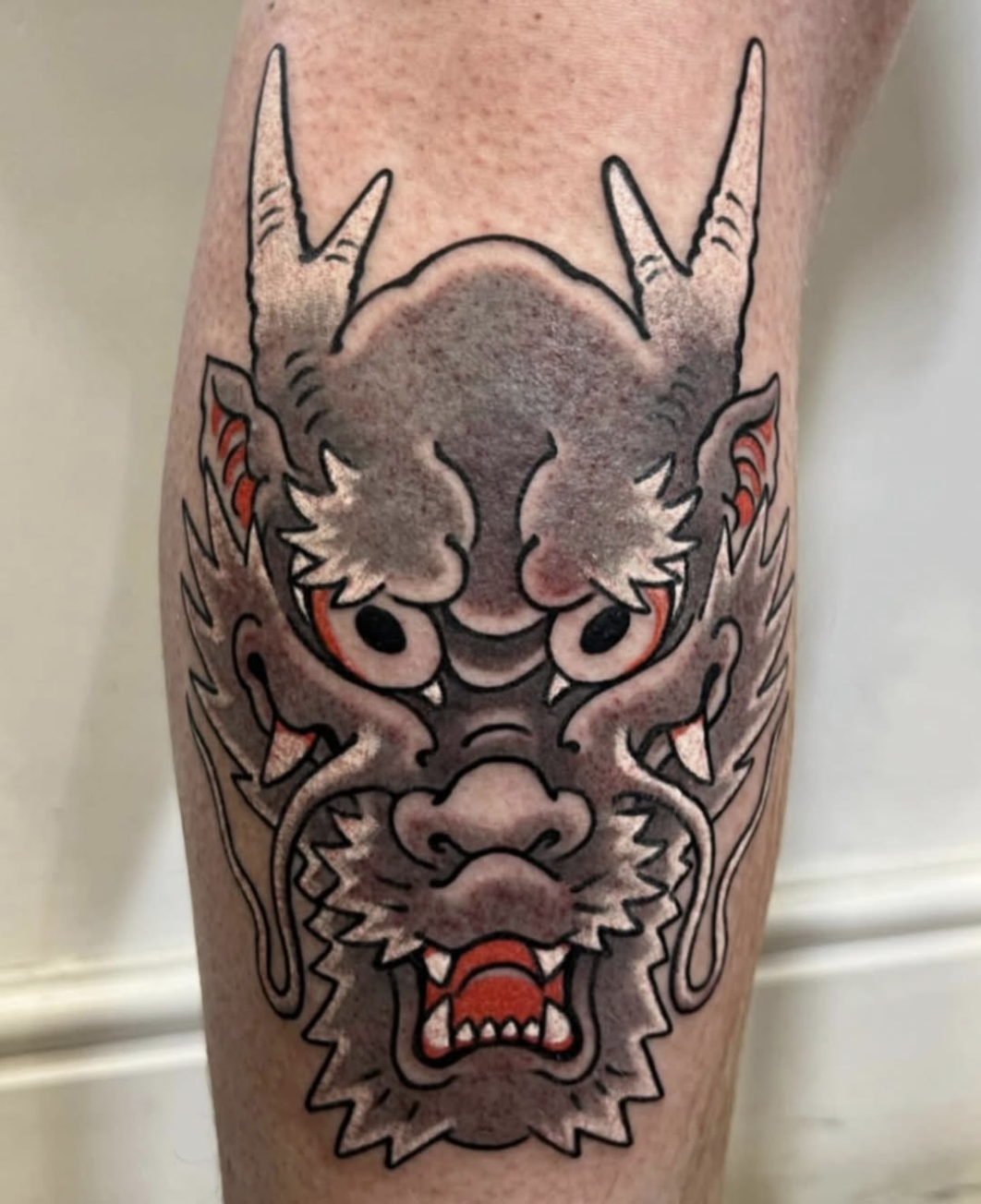
In Western mythology, dragons are often beasts to be slain. However, in Japanese folklore, the Ryu is a benevolent protector and a symbol of profound wisdom. These serpentine creatures associate with water and rainfall rather than fire. Artists often depict them clutching a pearl that represents the soul or wisdom. A dragon tattoo signifies a desire for strength and the protection of one's home and family. This makes it a powerful choice for a large-scale back piece or sleeve.
Conversely, the tiger, or Tora, represents the raw power of the earth and the wind. In traditional imagery, the dragon and the tiger often appear as opposing but complementary forces. They represent the balance between the spiritual and the physical realms. The dragon rules the sky, while the tiger rules the ground. Choosing this pairing for a tattoo creates a dynamic narrative of duality on the wearer's body. The tiger is also a charm against bad luck and disease. When we design these creatures at Red Point Tattoo, we focus intensely on the facial expressions. We ensure the creature looks alive and moving. This dynamic quality separates high-quality work from standard flash designs. It draws many clients who originally looked for Japanese tattoos in central London to our studio in Islington.
Koi Fish and The Dragon’s Gate
The Koi fish is one of the most recognisable symbols in Japanese tattooing. People love it for its bright colours and the inspiring legend associated with it. According to ancient folklore, a massive school of golden Koi swam upstream the Yellow River in China. They gained strength by fighting against the current. When they reached a waterfall at the end of the river, known as the Dragon's Gate, many turned back. However, a few persisted. The gods rewarded the Koi that finally leaped to the top of the falls by transforming them into golden dragons.
This myth transforms the Koi tattoo into a potent symbol of perseverance and ambition. It is a popular choice for individuals who have faced significant struggles. The direction of the fish and its colour can also alter the meaning. Traditionally, a Koi swimming upstream represents a current battle. One swimming downstream signifies a challenge already conquered. We frequently incorporate water, maple leaves, or lotus flowers with Koi designs. These elements add context and seasonal specificities to the piece. For residents searching for authentic examples of Japanese tattoos, visiting a specialist is crucial. You need an artist who understands these nuances to get a tattoo that accurately reflects your journey.
Spirits, Demons, and Deities
Hannya Masks and Oni
The imagery of demons in Japanese art is complex. It does not simply equate to "evil" in the Western sense. The Hannya mask originates from traditional Noh theatre. It depicts a woman whose face has distorted due to the intensity of her jealousy and obsession. It is a tragic symbol rather than a purely malicious one. It represents the extreme duality of human emotion. The mask shows rage, yet artists often depict it with a sorrowful expression around the eyes. A Hannya tattoo can serve as a reminder of the destructive power of unchecked emotion.
On the other hand, the Oni are ogres or trolls. They act as guardians of hell but can also be protectors of the righteous. They are fearsome in appearance, often with red or blue skin, wild hair, and tusks. They represent physical strength and invincibility. People often get Oni tattoos to ward off bad luck or to show that they are not to be trifled with. These designs allow for bold colour saturation and dramatic shading. At Red Point Tattoo, we ensure that the expressions on these masks capture the subtle interplay of aggression and sorrow. We often see clients travel to us after searching for Japanese tattoos in central London. They come specifically to get these culturally rich masks inked by artists who respect the theatrical origins.
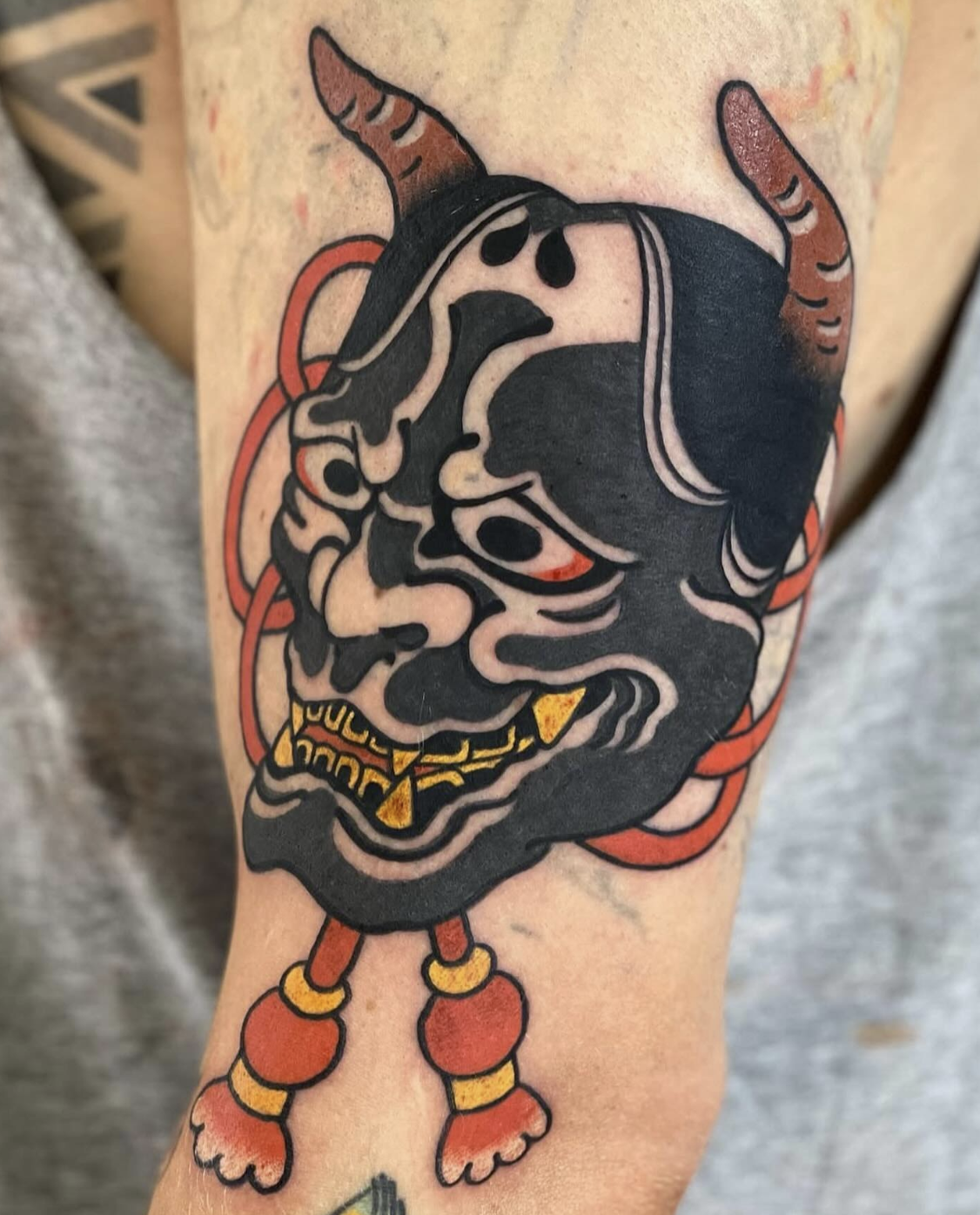
Traditional Hannya Mask, often serving as protectors against evil.
Flora and Elemental Backgrounds
Cherry Blossoms (Sakura) and Waves
No Japanese tattoo is complete without the supporting elements that tie the main subjects together. The background, often consisting of wind bars (Gakou), clouds, and waves, is vital. These elements dictate the flow of the tattoo on the body. They ensure it moves with the muscle structure. Among the flora, the Cherry Blossom (Sakura) is the most iconic. It symbolises the fleeting nature of life. These flowers bloom beautifully but fall quickly. They remind the viewer to live in the present moment.
Sakura soften the look of fierce dragons or warriors. They add a layer of philosophical depth to the piece. Similarly, water waves represent the ebb and flow of life, strength, and movement. Water can be gentle or destructive. Its inclusion in a tattoo connects the wearer to the natural world. Great Japanese work depends on how these background elements interact with the main subject. The dragon might weave through clouds, or the Koi might splash through waves. Our artists at Red Point Tattoo are masters of this background composition. We ensure that every gap is considered. This attention to detail is why we are a top choice for anyone researching Japanese tattoos in central London and seeking a cohesive look.
Japanese art and folklore provide an endless well of inspiration for tattoos. These designs are both visually stunning and deeply meaningful. From the perseverance of the Koi to the protective wisdom of the Dragon, these symbols allow you to wear your values on your skin. However, the key to a successful Japanese tattoo lies in the execution. The artist must understand the tradition. It is not enough to simply copy an image; the design must flow with the body.
If you are looking for world-class Japanese tattoos in central London, look no further than Red Point Tattoo. Located conveniently in North London, we offer a welcoming environment where tradition meets modern artistry. We invite you to browse our portfolios or visit our booking page to start your consultation. Whether you want to discuss a complex back piece or a smaller design, our team is ready. We will bring your vision to life with the respect and skill it deserves. Visit us to see why so many collectors trust Red Point Tattoo with their most significant pieces.